Sell It for More.
Fix the Dents Before the Listing.
Every visible dent is a negotiation tool for the buyer. Joe removes those leverage points — preserving factory finish, clean history, and full asking price — before your vehicle hits the market or the dealer’s appraisal lane.
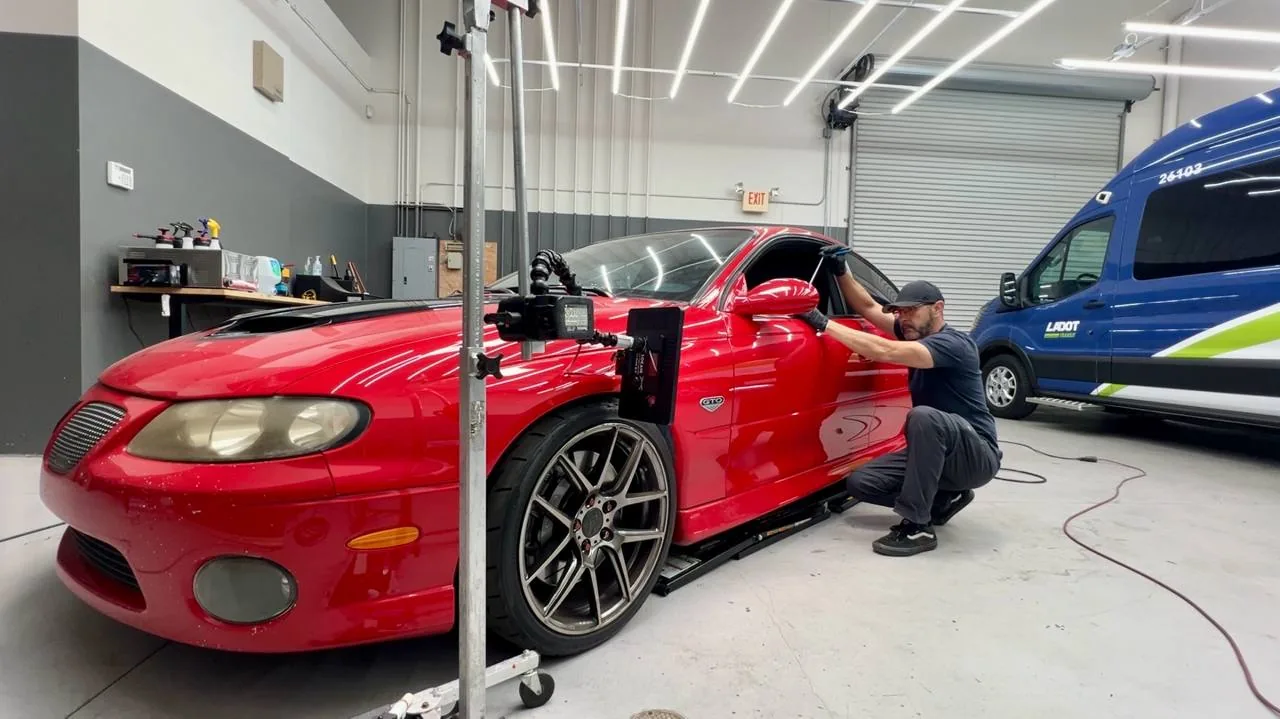
Selling soon? Send photos — Joe will tell you which repairs actually pay back at sale.
Informed buyers and dealer appraisers know exactly how to read a vehicle’s condition — and they use what they find to justify lower offers. Understanding how this works helps you see the ROI on repair clearly.
First Impression Anchoring
Buyers form a price anchor before they test drive. A vehicle with visible dents is mentally categorized as a “project” or “needs work” — and that perception follows the entire negotiation, regardless of the car’s mechanical condition.
The $500 Dent “Deduction”
Buyers routinely cite dents to justify below-asking offers — often using round numbers like “$500 for the dents” that bear no relation to actual repair cost. A $175 PDR repair eliminates a $600 negotiation point.
Paint Thickness Gauges
Sophisticated buyers and dealers run paint gauges over every panel. Repainted panels show elevated readings — triggering deeper skepticism about the vehicle’s history. PDR-repaired panels pass every gauge because the factory paint is untouched.
Dealer Appraisal Deductions
Trade-in appraisers work from a standardized condition guide. Every dent that drops the condition rating from “Good” to “Fair” translates directly to a lower ACV (actual cash value). PDR brings the rating back up — and the offer with it.
Dealers Lowball Dented Vehicles
Even when the damage is minor, dealers discount dented vehicles aggressively — because they know they’ll either pay retail body shop rates to fix it or sell it at a reduced price. A $300 PDR repair before the appraisal can add $800–$1,500 back into the trade-in offer. The math is consistently positive.
Every repainted panel on a vehicle creates a question in a buyer’s mind. Factory paint on every panel answers all of them — and justifies your asking price without negotiation.
Clean Carfax = Full Asking Price
A vehicle with all factory paint and no repair history invites full asking price offers. Buyers pay a premium for certainty — and original paint across every panel is the clearest signal that nothing has been hidden or repaired.
Repainted Panels Trigger Suspicion
When an appraiser or experienced buyer finds a repainted panel, they don’t just adjust for the paint — they adjust for what they think caused it. Body shop work implies prior damage, and that implication costs you money.
PDR Preserves Factory Finish
PDR works from inside the panel. The factory paint is never touched. When a paint gauge reads factory thickness across every panel, there’s nothing to question — and nothing to discount.
Private Sale vs. Trade-In ROI
The return on pre-sale PDR is highest on private party sales, where buyers can’t hide behind appraisal systems. But dealer trade-ins also benefit — condition ratings directly determine ACV, and PDR improves the rating.
Walk Your Vehicle in Good Lighting
Before contacting Joe, walk your entire vehicle under direct sunlight or a garage light held at a low angle. Look from every direction. Dents that are invisible straight-on become obvious at raking angles — the same way a buyer or appraiser will view it.
Text Photos — Get a Prioritized Quote
Send photos of every dent you find. Joe reviews them and gives you a quote — plus an honest opinion on which repairs have the highest return relative to your expected sale price and channel. Some repairs aren’t worth the cost. Joe will tell you which ones.
PDR Repair — Often Same Day
Most pre-sale PDR jobs are completed same-day. Multiple dents across several panels may take a day. Joe schedules around your listing timeline — whether you’re posting privately tomorrow or preparing for a dealer appraisal next week.
Detail, Then Photograph, Then List
After PDR is complete: get the car detailed (interior and exterior). Then photograph it in good light — the clean car with no dents photographs dramatically better and anchors buyers to your asking price before they’ve even made contact. List at full private-party value. The dents are gone. The negotiation leverage they represented is gone with them.
Receive Offers at Your Price
After repair, your vehicle has factory paint intact, no repair history on Carfax, and no negotiation leverage left in the buyer’s hands from visible damage. What you set as the asking price is what the sale can be — instead of what’s left after negotiation.
Pre-sale PDR makes sense for every vehicle where the repair cost is less than the negotiation it prevents. Joe works all makes from daily drivers to luxury and performance cars.
Joe’s shop is in Upland — centrally located for sellers throughout the Inland Empire and San Gabriel Valley. Whether you’re selling privately in Rancho Cucamonga or trading in at a dealer in Ontario, the shop is close.
Does fixing dents before selling actually increase sale price?
Should I fix dents before trading in a car?
Will PDR show up on the vehicle history report?
How long does pre-sale dent repair take?
Is pre-sale PDR worth it if I’m only getting a few thousand for the car?
Listing Soon? Fix the Dents First.
Text photos to (909) 340-3440. Joe responds within minutes with a quote and an honest assessment of which repairs pay off.
Get My Free EstimateReturning a lease? Lease Return Dent Repair →