Advanced Paintless Dent Repair.
This Is Where Most Shops Stop.
Complex creases. Deep impacts. Aluminum panels. EV vehicles with no backside access. This level of repair demands precision, experience, and specialized tooling that most PDR technicians simply do not have.
Repair That Goes Beyond the Basics
Standard PDR handles everyday dings. Advanced PDR is a different discipline — damage with depth, complexity, or access challenges that most technicians are not equipped to handle.
What Standard PDR Covers
Everyday door dings, minor hail impacts, small parking lot strikes. The metal displacement is shallow, the dent is self-contained, and a skilled technician with standard tools can restore the panel cleanly in under an hour.
Most PDR shops are built around this volume. It is fast, predictable, and repeatable. That is not what this page is about.
What Advanced PDR Covers
Crease dents that travel along a body line. Deep impacts that radiate tension outward. Aluminum panels that work-harden under pressure. EV bodies with no traditional backside access. Large multi-point damage requiring strategic sequencing.
In the wrong hands, advanced damage gets worse, not better. Metal has memory, and overworked metal does not forgive. This requires a fundamentally different level of experience and tooling.
The outcome gap is real: A standard PDR repair attempted on advanced damage often leaves the panel worse than before — requiring a body shop finish that erases the factory paint entirely. The cost of the wrong approach is always higher than the cost of the right one.
The Damage That Separates Experts From Everyone Else
Not on any price board. These repairs require a proper assessment, the right tools, and a technician who has solved the same problem before — many times.
Crease & Line Dents
Dents that travel along a body character line or fold. Require sequential pressure from multiple access angles to roll the metal back without waviness or ghosting.
Deep Impact Dents
High-energy impacts from posts, carts, or collisions that push metal significantly below the surface. The depth plus the surrounding tension and crown distortion make these complex.
Aluminum Panel Repair
Aluminum work-hardens with repeated pressure. It has a narrow correction window — exceed it and the metal loses its ability to respond. Common on modern luxury vehicles and EVs.
EV & Limited-Access Panels
Tesla, Rivian, Lucid, and BMW iX use large single-piece aluminum stampings with minimal or no backside access. Glue-pull, tap-down, and indirect correction techniques required.
Roof & Hood Repair
High-crown surfaces where every angle shows. A slight low or high spot becomes immediately visible in sunlight. Zero-margin work, verified under reflection board at every stage.
Multi-Point & Large-Area
Multiple dents across one panel, or large debris strikes. Requires strategic sequencing — treating impacts in the wrong order creates secondary tension that compounds the damage.
How Joe Reads a Panel Before Touching It
Every advanced repair begins with a read, not a wrench. What happens in the first few minutes determines the outcome of the entire job.
Why this matters for your vehicle: This assessment is what allows Joe to give an honest outcome projection and to present two repair options based on what the panel actually allows. The reflection board does not lie, and neither does the assessment. If a result cannot be achieved, you know before work begins.
Behind the Panel
That dent looks simple. Until you see what’s behind the panel.
What looks like a small surface ding sits in front of a precisely engineered structure. PDR technicians work blind — navigating every brace, bracket, and reinforcement to restore the panel without a trace.
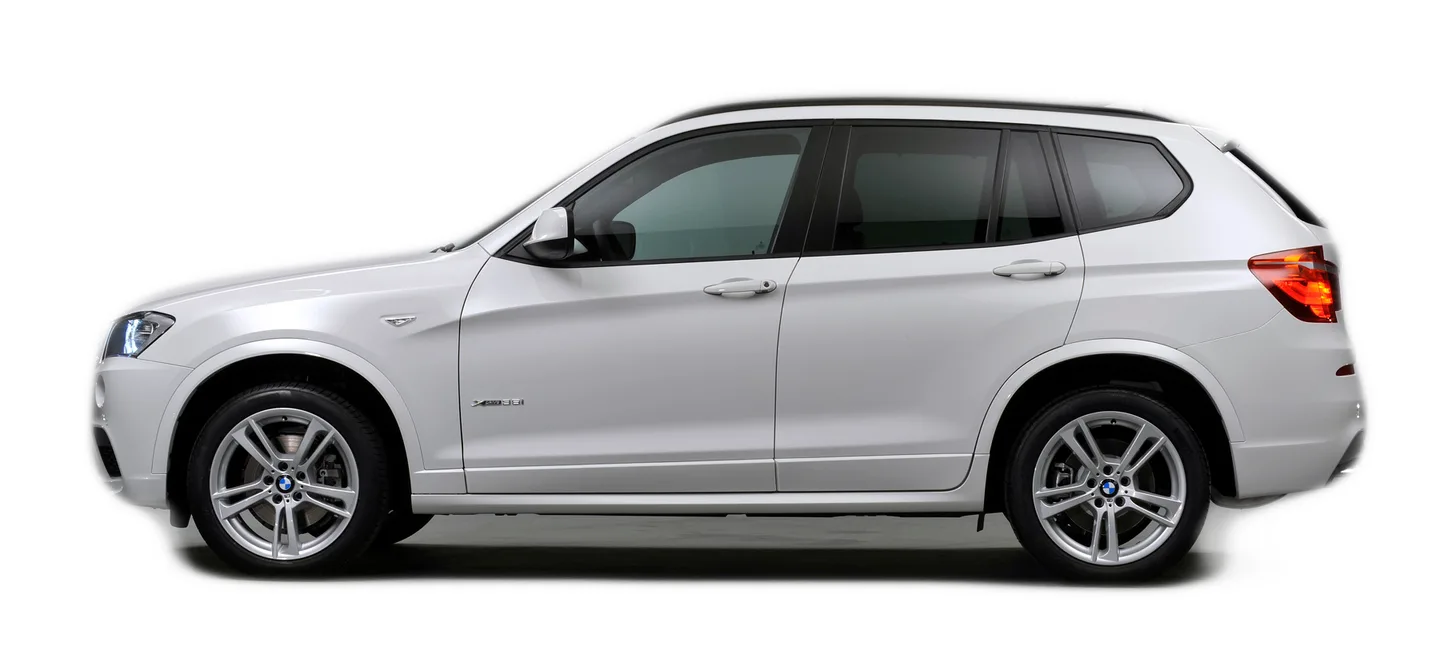
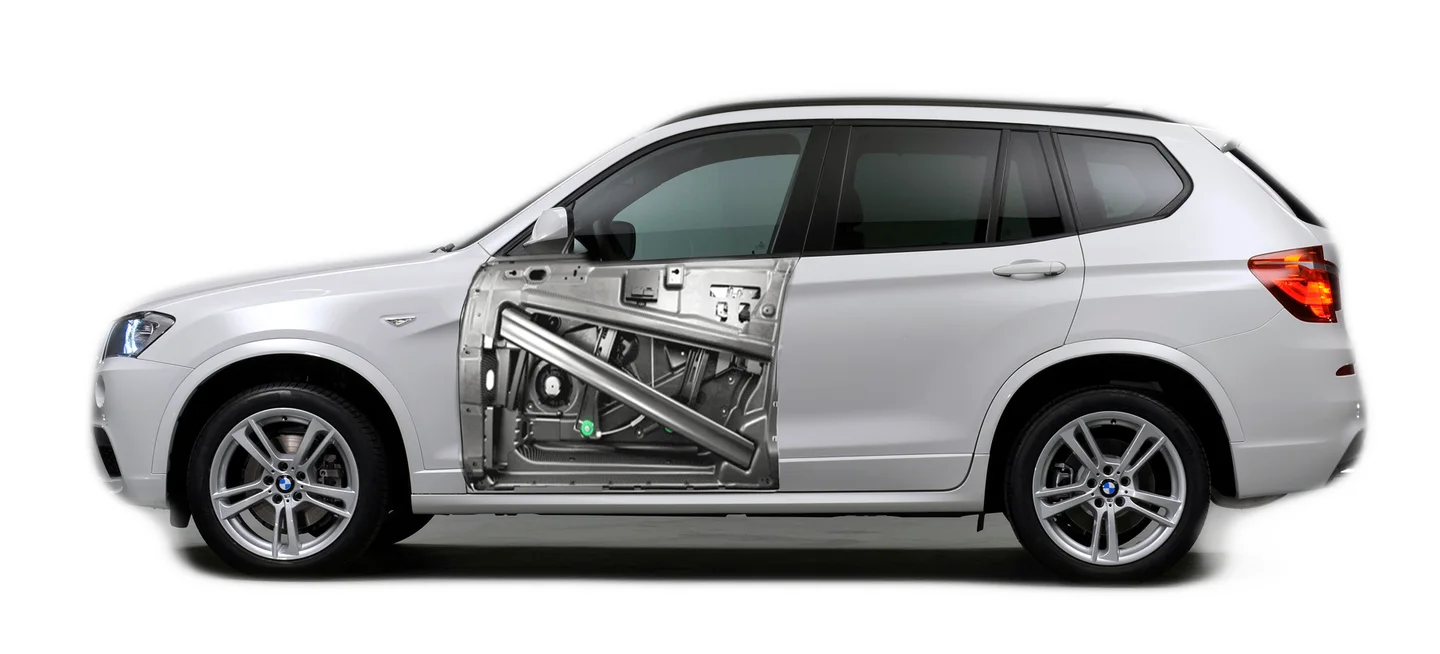
← drag to reveal →
Advanced PDR Is Not Offered Everywhere. There’s a Reason.
Most PDR operations focus on high-volume, simple repairs — hail jobs, door dings, fast turnaround. That is a valid business. But it is not the same skillset required for complex panel work. Advanced repairs require a technician who has spent thousands of hours reading metal, not just moving it.
Joe Garcia has been working advanced PDR since before many current technicians started — aluminum work-hardening, EV body construction, crease sequencing without secondary distortion. This depth of knowledge is not common.
- Reflection board on every repairNever estimated by eye — board analysis is standard before any tool touches the panel
- Aluminum-safe techniqueTool selection and pressure limits that protect against work-hardening failure on modern panels
- EV panel experienceTesla, Rivian, Lucid, BMW i-series and comparable large single-piece aluminum bodies
- Honest outcome projectionsIf a result cannot be achieved, you are told before work begins — not after the job is done
- Two options, alwaysEvery client has a choice explained clearly before any commitment is made
- Complete satisfaction guaranteeIf the outcome doesn’t match what was agreed upon before work began, no charge is applied
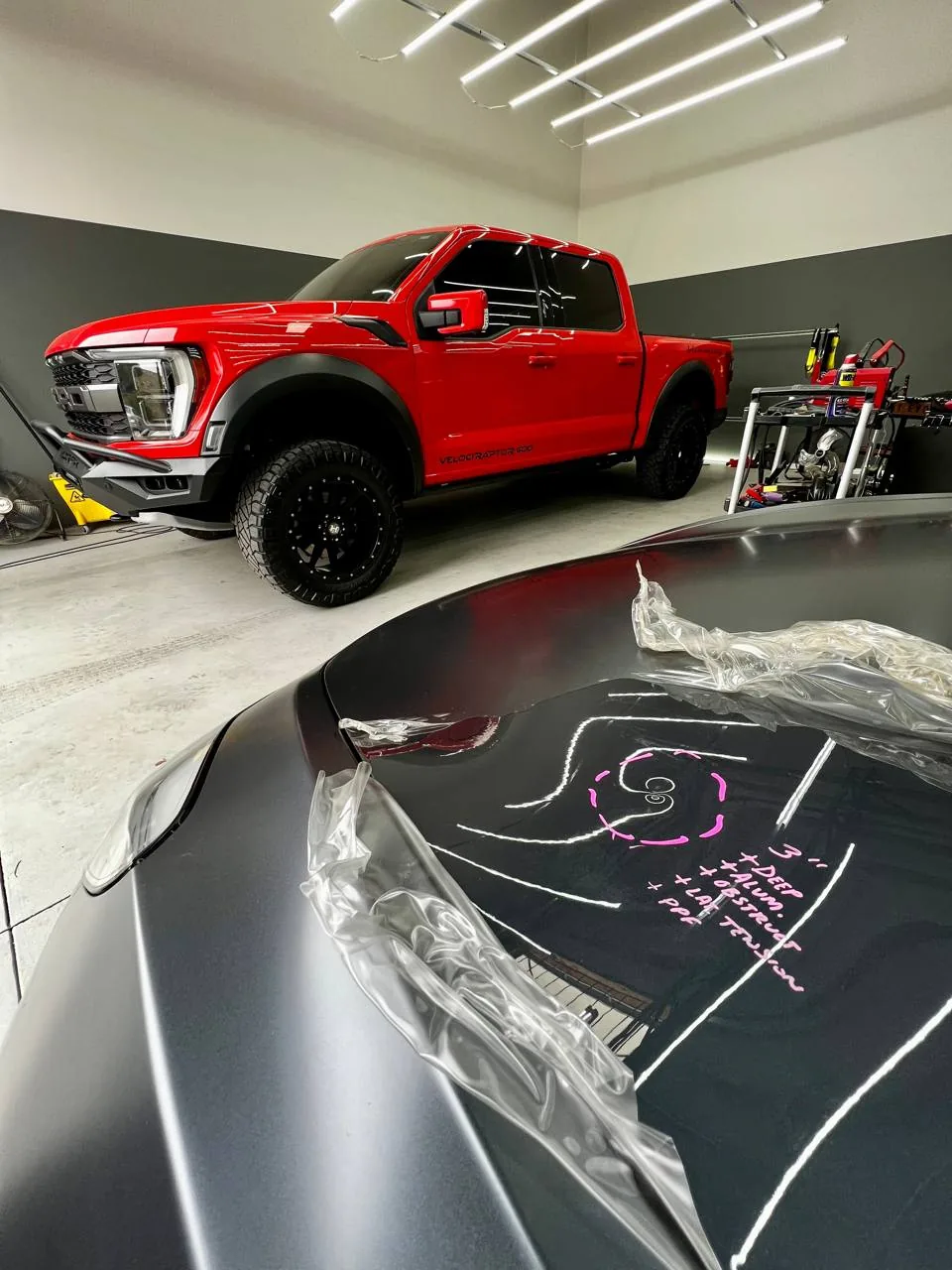
Every Client Has a Choice. Here Is How It Works.
After assessing the panel, Joe presents two repair paths — not because one is inferior, but because the right result depends on what the client values. Both use the same advanced techniques. The difference is how far the correction is taken.
Maximum correction. The repair is taken until the panel is indistinguishable from factory condition — verified under reflection board at multiple angles. Zero visible trace under any lighting.
- Reflection board sign-off at multiple angles before the job is closed
- No detectable low or high spots under direct or raking light
- Additional time invested to achieve the final 5–10% of correction
- Ideal for show vehicles, lease returns, pre-sale prep, and high personal standards
- Cost reflects precision time and multiple final verification passes
Strong correction that eliminates the damage visually in real-world conditions — daylight, parking lots, normal viewing distance. Indistinguishable in daily use. A trace may remain under close reflection-board inspection only.
- Damage eliminated to the eye under normal everyday conditions
- Possible trace only under close inspection with direct raking light
- Final 5–10% of correction traded for a lower total investment
- Ideal for daily drivers, fleet, insurance-conscious, and practical ownership
- Same advanced skill applied — less final verification time required
Complex damage? Send photos. Joe will tell you which path fits your panel.
Frequently Asked About Advanced PDR
Honest answers about the process, the cost, and what to expect before you commit to anything.
Advanced PDR typically applies when the dent has a crease or fold rather than a smooth dome shape; when the damage is in an aluminum panel (hoods, doors, or full EV bodies); when the impact is deep relative to the panel’s surface crown; when multiple dents are across a single panel; or when the damage is in a high-visibility area like a roof centerline, hood, or sharp body line.
If you are unsure, send photos or bring the vehicle in. Joe will assess it and tell you honestly whether it is standard or advanced — and what that means for cost and outcome — before anything is committed.
Several factors drive higher cost: the time required is significantly longer; specialized tooling is involved (long-reach tools, aluminum-safe tips, glue-pull systems, reflection boards); access often requires partial disassembly of trim or panels; and the margin for error is smaller, requiring more deliberate work at every stage.
The cost reflects the outcome, not a markup. A standard PDR repair attempted on advanced damage does not produce the same result — it produces a worse one. The investment in advanced work is the difference between a finished repair and a panel that ends up at a body shop anyway.
Many crease dents can be corrected with advanced PDR. The key variables are whether the paint is intact, whether the crease has sharp metal folding that limits correction range, and the panel’s overall condition and access. This is one of the defining capabilities of working at the advanced level.
Whoever told you creases always need bodywork was either describing a more severe case, or was not working at the advanced PDR level. There are crease dents that PDR cannot fully address — Joe will tell you honestly which category yours falls into before any work begins.
Yes. Aluminum repair and EV body panel work are a direct part of this specialty. Aluminum requires different tool selection, adjusted pressure technique, and awareness of work-hardening thresholds — push too hard or too many times and the metal loses its ability to correct further.
EV panels — particularly the large single-piece aluminum stampings used by Tesla, Rivian, Lucid, and others — often have limited or no traditional backside access, requiring glue-pull, blending, and indirect correction. Joe has direct hands-on experience with these vehicles.
That depends on which option you choose and what the specific panel allows. The Flawless Standard is verified with a reflection board until the result is indistinguishable from factory — achievable on the large majority of advanced repairs when the paint is intact and metal history is clean.
The Real-World Standard delivers a result that looks excellent in daylight and normal conditions. A trace may remain under close reflection-board inspection, but it will not be visible in typical ownership scenarios. Joe tells you what is realistically achievable on your specific panel before work begins.
In most cases, yes — and significantly. A body shop repair means sanding, primer, paint matching, clear coat, and a result that may blend well but is never factory. Paint thickness changes. Subtle color shift happens over time. And the repair triggers a Carfax record, reducing resale value.
Advanced PDR preserves the original factory paint completely. No Carfax record. No repaint. No filler. When the damage falls within advanced PDR’s range, the outcome is categorically better than body shop work — not just less expensive, but structurally and aesthetically superior. Body shop work is the fallback when PDR is not possible. That is not the starting point here.
Complete satisfaction or no charge applied. That is not a promotional line — it is how this operation has run for nearly three decades. If the outcome does not match what was agreed upon before work began, the charge is removed.
This is why the assessment matters. Joe will not commit to an outcome he does not believe he can deliver. If there is a factor that limits the result — prior bodywork, paint condition, metal history — it is surfaced during assessment, not after the job is done.
For high-value, collector, or show vehicles, advanced PDR at the Flawless Standard is the correct choice when the damage is within PDR’s range. A repaint changes the vehicle permanently. Factory paint is a one-time event. For a collector car or high-value daily driver, retaining that original paint is often worth significantly more than the repair cost itself.
Vehicles including Porsche, BMW M-series, Ferrari, Bentley, Mercedes AMG, and Tesla Performance models have come through this shop. The work is done with the same precision the vehicle was built with.
Send Photos. Get a Straight Answer.
No commitment. No pressure. Joe reviews photos of your vehicle and gives you an honest assessment — what the damage is, what is achievable, and what both options look like before you decide anything.
Start Your Evaluation →