What a Bad Paintless Dent Repair Really Looks Like
Before you hand your panel to the cheapest dent guy in town, see what a botched PDR job leaves behind — four warning signs, what can still be saved, and how to pick a technician who won’t make it worse.
A bad paintless dent repair is one where the technician pushed the metal too hard, used the wrong tool, or accepted a dent that was never a PDR candidate. It leaves high spots, stretched metal, cracked clearcoat, drilled holes, or body filler hidden under fresh paint — damage that usually looks worse than the original dent, and some of it cannot be undone. The variable is never PDR itself. It is the person holding the tool.
Already had a repair that does not look right? Send a photo — Joe will tell you honestly whether it can still be saved.
I have been doing paintless dent repair since 1997, and a real part of my week in the Inland Empire is spent looking at panels another shop already touched. Here is the hard part to hear: almost every one of them was an easy fix when it started. A door ding, a small crease, a parking-lot dent. Then it went to someone working fast and cheap, and a clean job became a problem that now needs paint, filler, or a new panel.
Paintless dent repair looks simple from the outside. A few rods, a light, a steady hand. That is exactly why it attracts so many undertrained “dent guys” running out of a parking lot for a quick cash price. The tools are cheap to buy. The skill to use them is not. This page shows you what a bad PDR job actually looks like, so you can spot one before it happens to your car — or get an honest read on one that already did.
4 Warning Signs of a Bad PDR Job
Every panel below started as a fixable dent. Each one came back worse after a rushed, low-bid repair. These are the four failures I see most often, and what each one really means for the car.
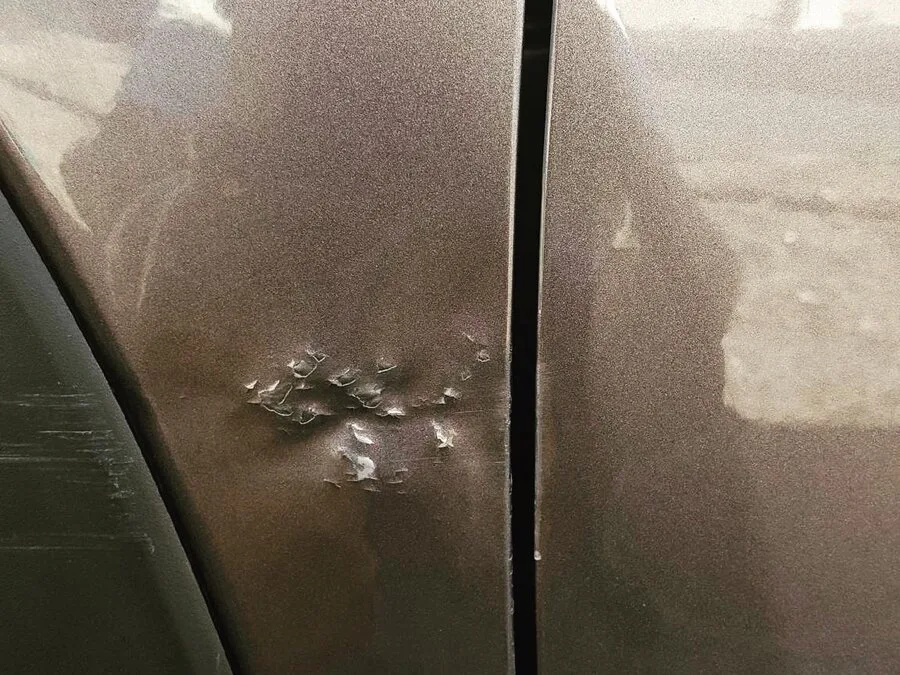
This is what an inexperienced PDR tech leaves behind: the wrong tool, too much force, and one push too many. Each over-push pokes the panel up from behind until the metal stretches and the finish cracks for good. Worked this far past its limit, the panel is beyond what any paintless repair can recover, and the only fix left is paint.
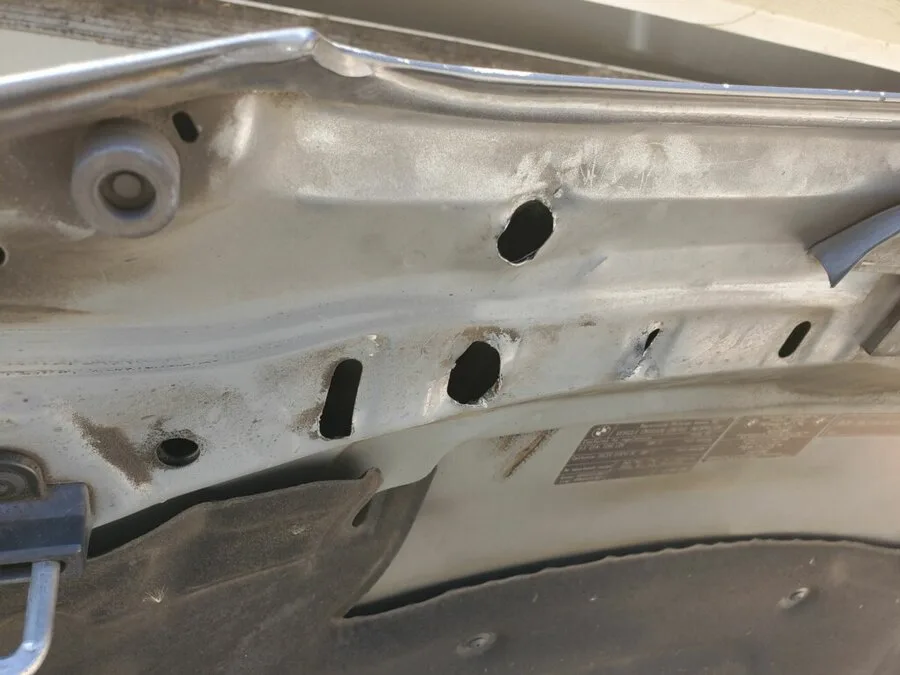
Rather than reach the dent the right way, the previous shop bored holes straight through the panel and never sealed them. The bare edges are already rusting. A proper paintless repair adds zero holes to your vehicle.
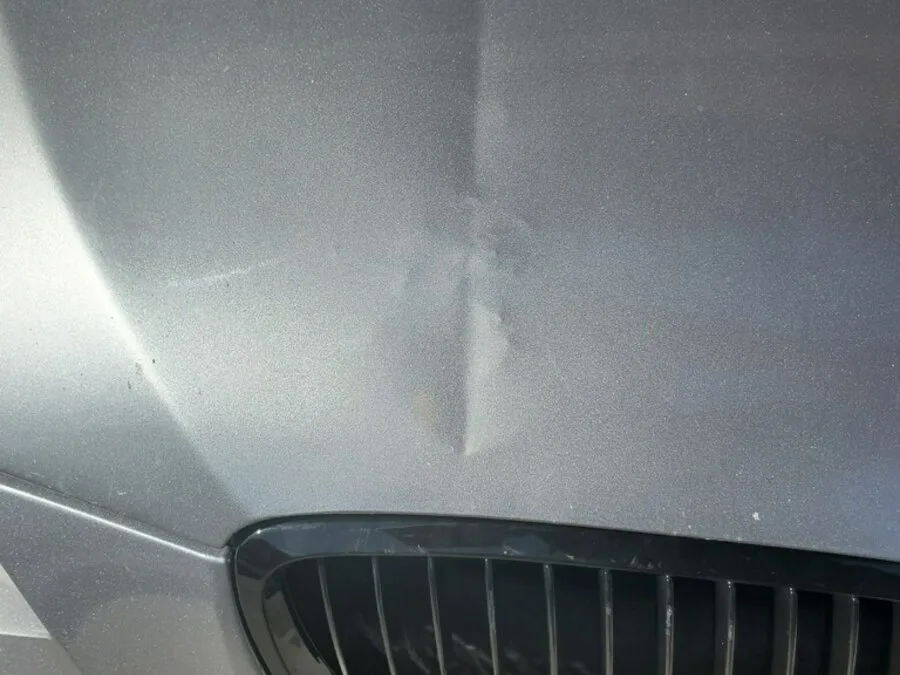
A heavy hand and a sharp tool left a raised bump the size of a thumbprint on this hood, with the clearcoat stretched thin and stressed around it. The dent that started it was barely there. The leftover is anything but.
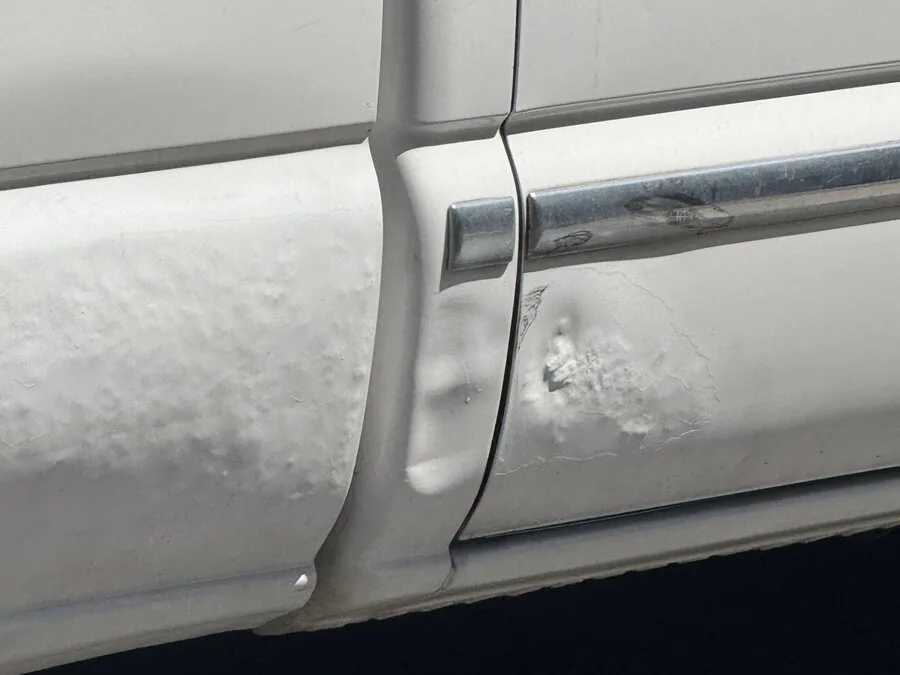
Sold as paintless work, this panel was actually packed with body filler and painted over. A few months on, the filler is bubbling and splitting along the edge. Genuine paintless repair uses no filler and no paint, so there is nothing to crack or fall out later.
Real examples of bad dent repairs Joe has been asked to correct. If your car looks like any of these, it is worth a second opinion before you pay another shop.
Good PDR vs. Bad PDR at a Glance
A repair done right
- Factory-smooth in direct sunlight, from any angle
- No marks, holes, or filler added to the panel
- Reflections stay straight along the body lines
- Invisible the day you pick it up and six months later
- No Carfax record, factory finish intact
A repair done wrong
- High spots or waves that catch the light
- Cracked or stressed clearcoat
- Holes drilled through the panel for access
- Filler hidden under fresh paint
- Looks okay in the shade, shows in the sun
A Wall of Ruined Repairs
Every panel here came to Joe after another shop already worked on it. High spots and waves from over-pushing, cracked clearcoat, body filler smeared over dents and rust, holes drilled and left open, and raw patches never painted. These are real repairs, not stock photos. Every one of them started as a simpler dent, and every one ended up needing paint or panel work the first repair never should have caused. Tap any photo to see it up close.
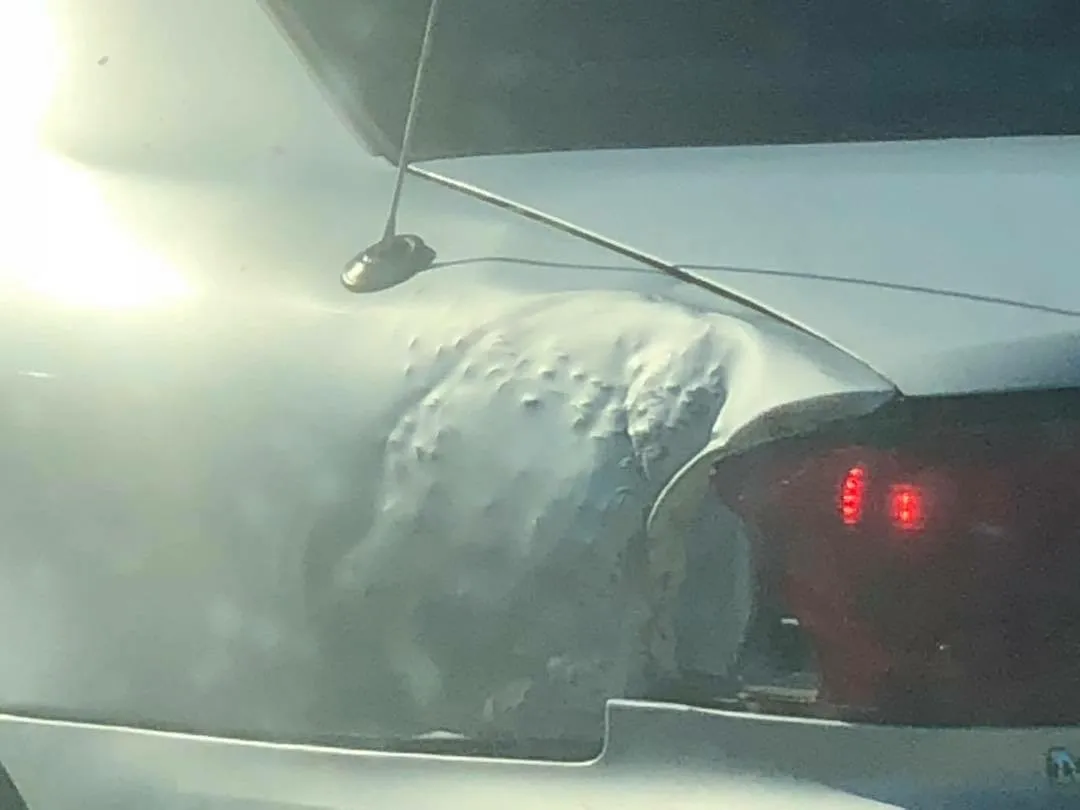
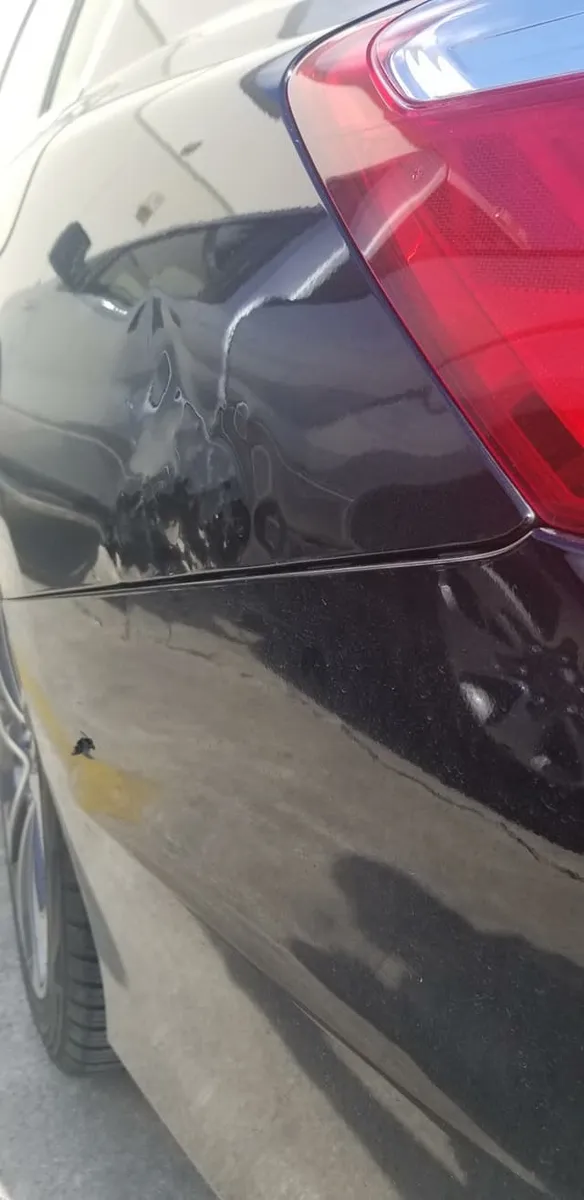
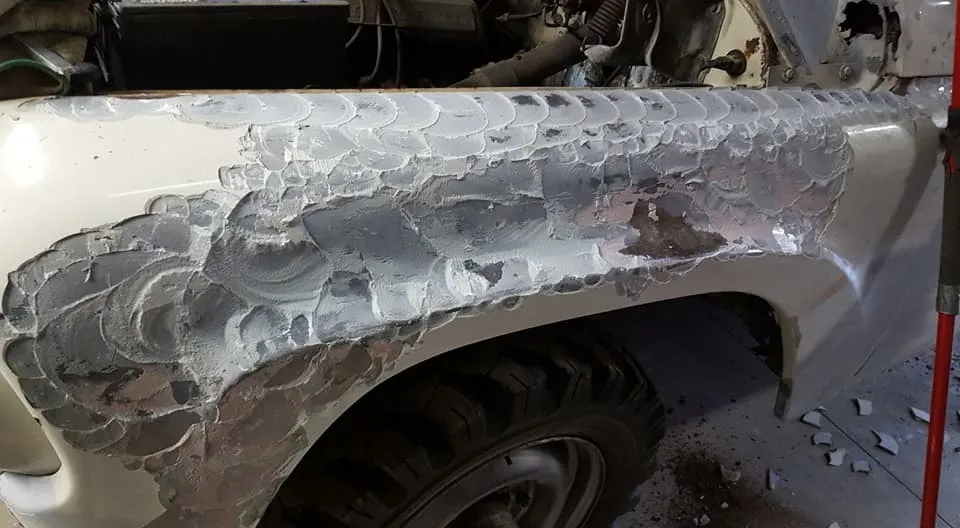
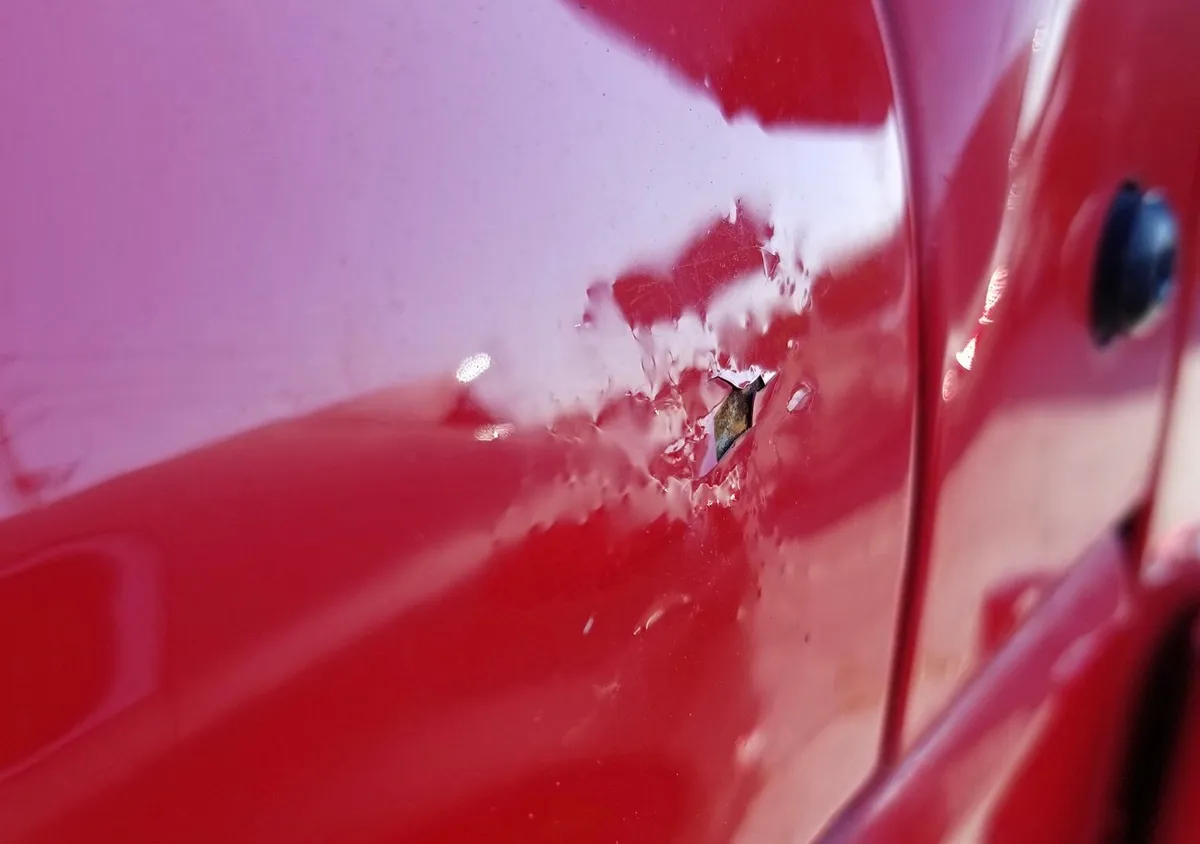
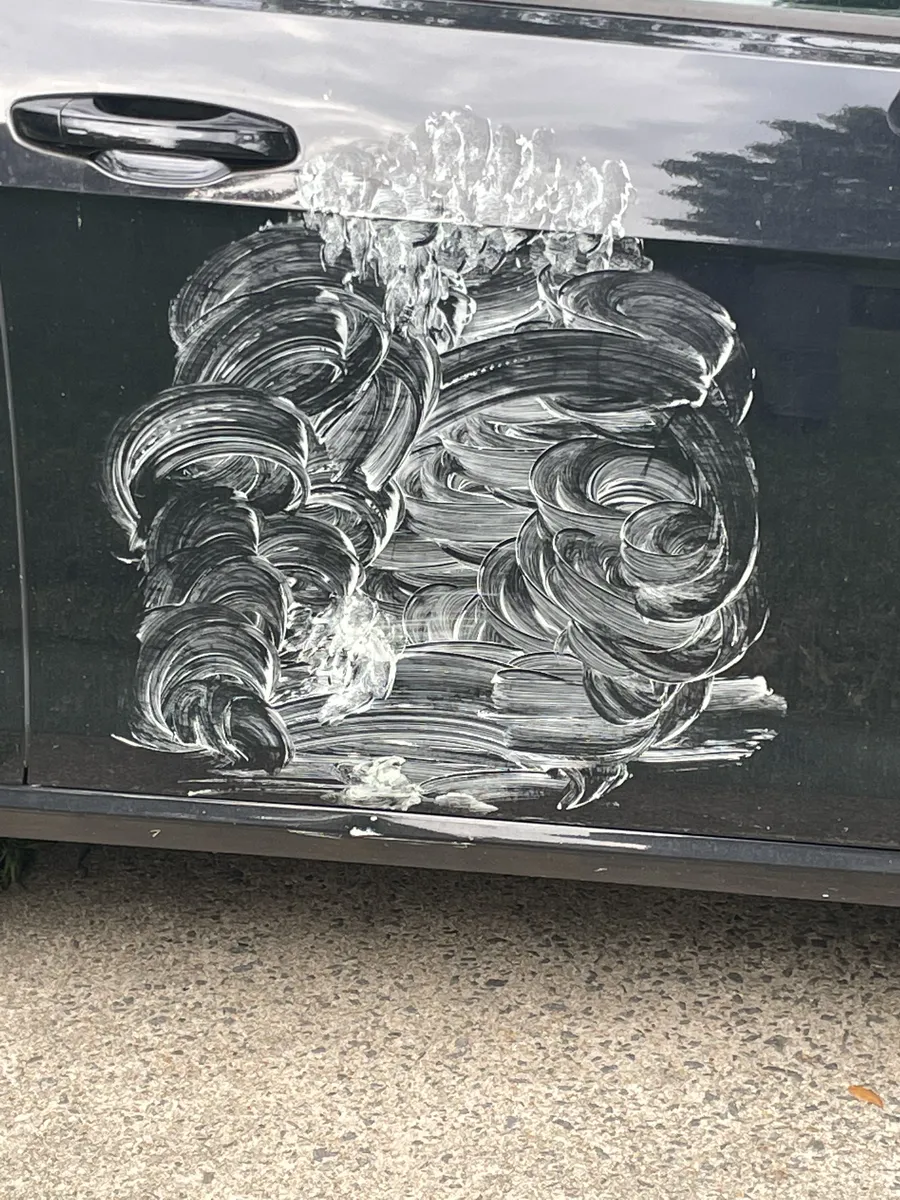
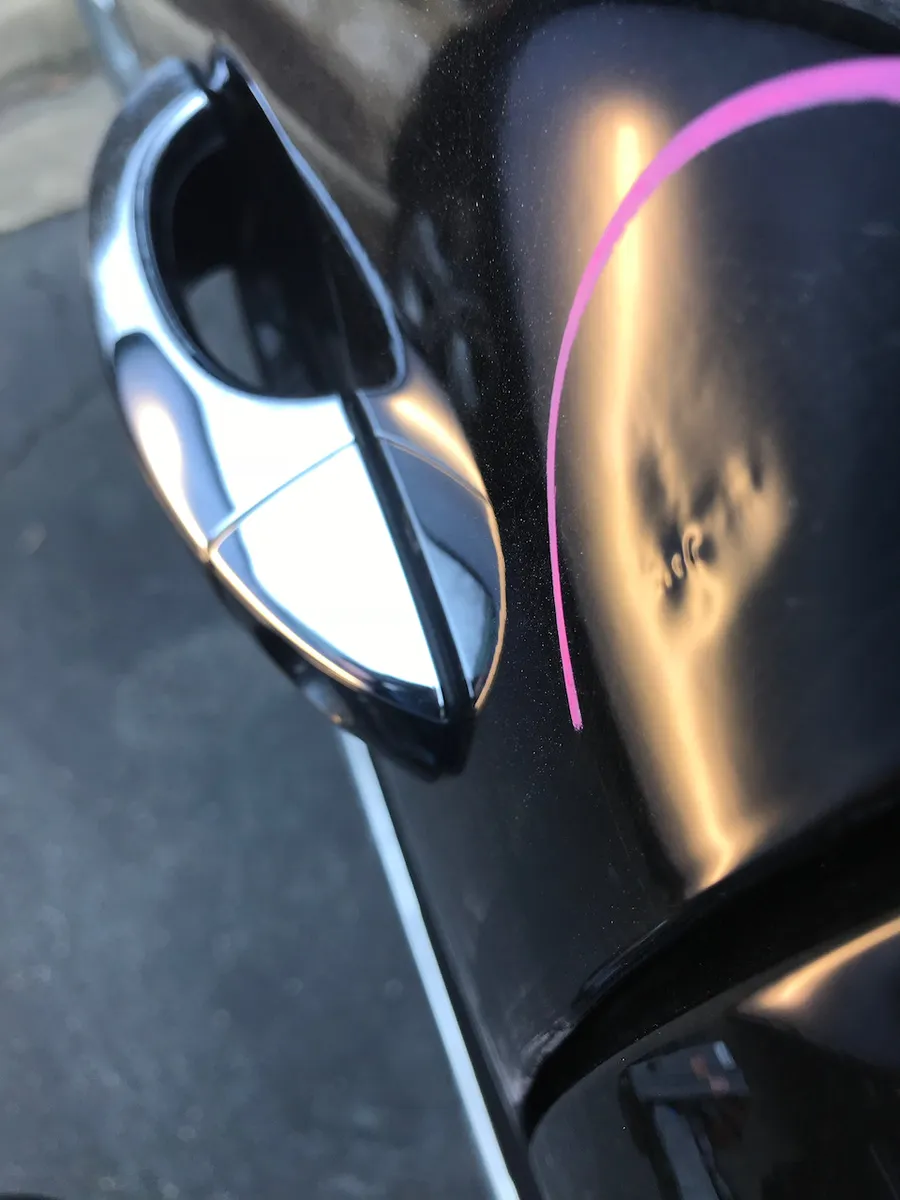
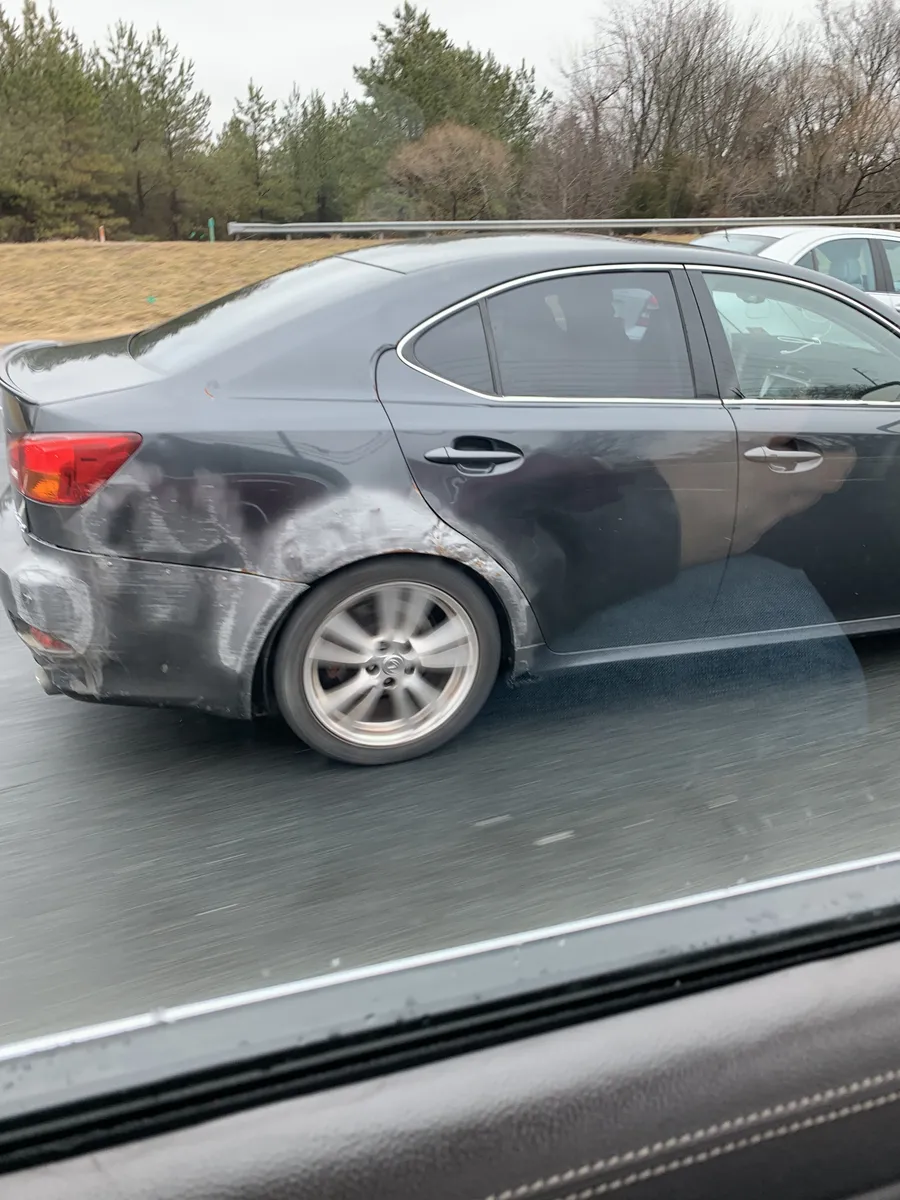
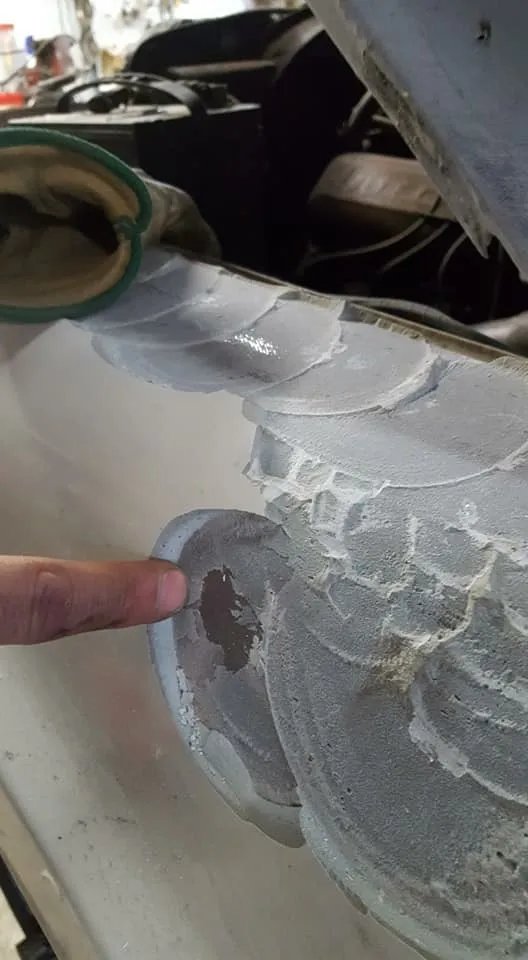
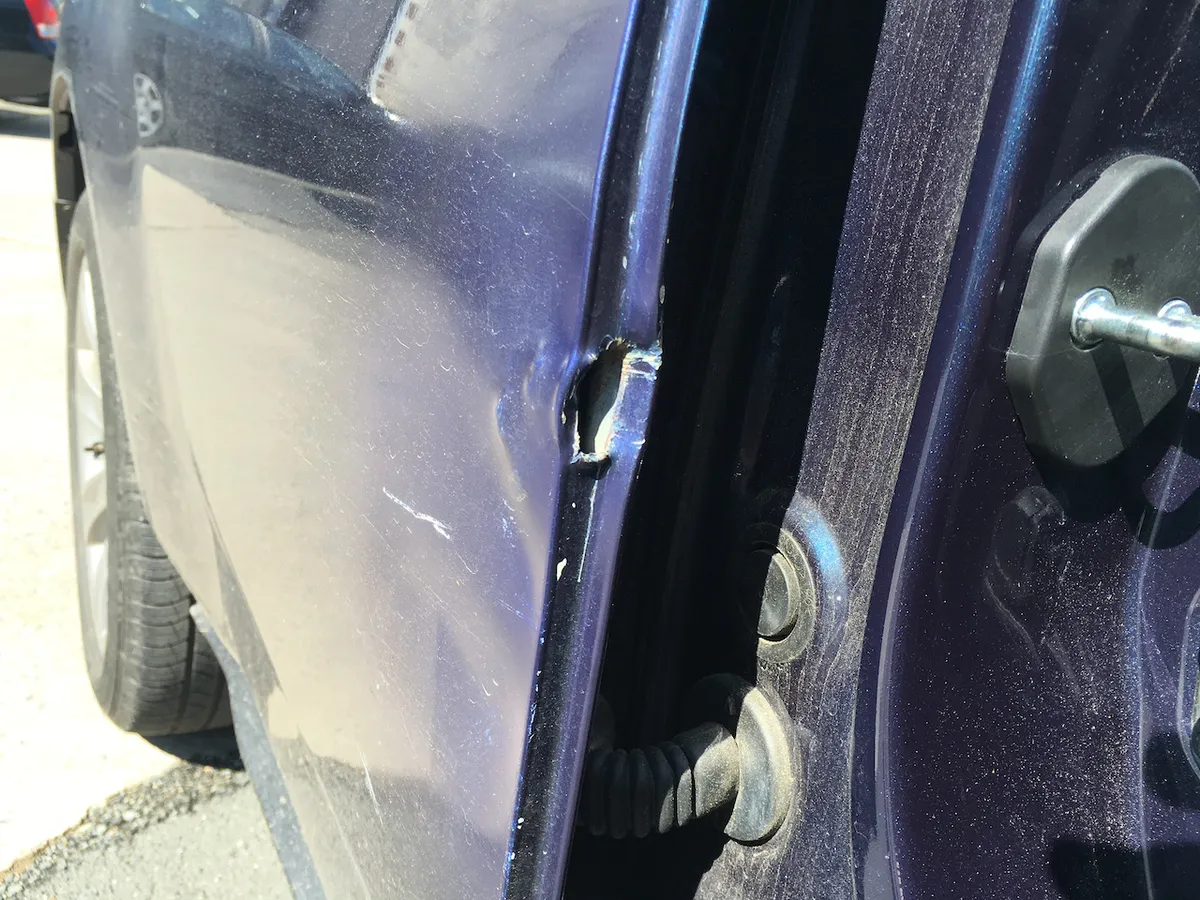
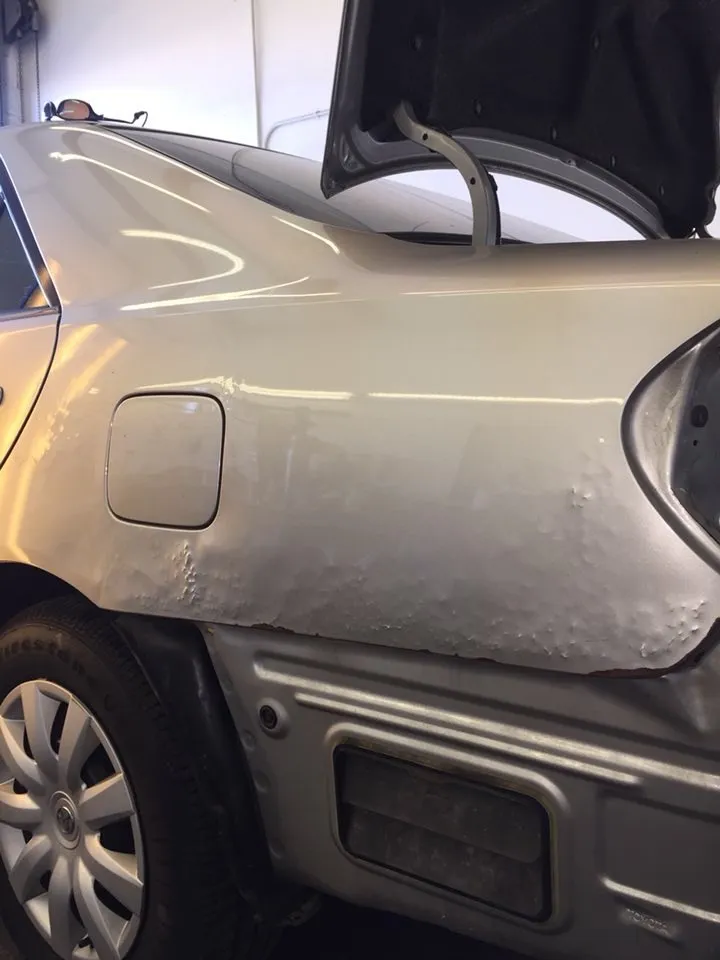
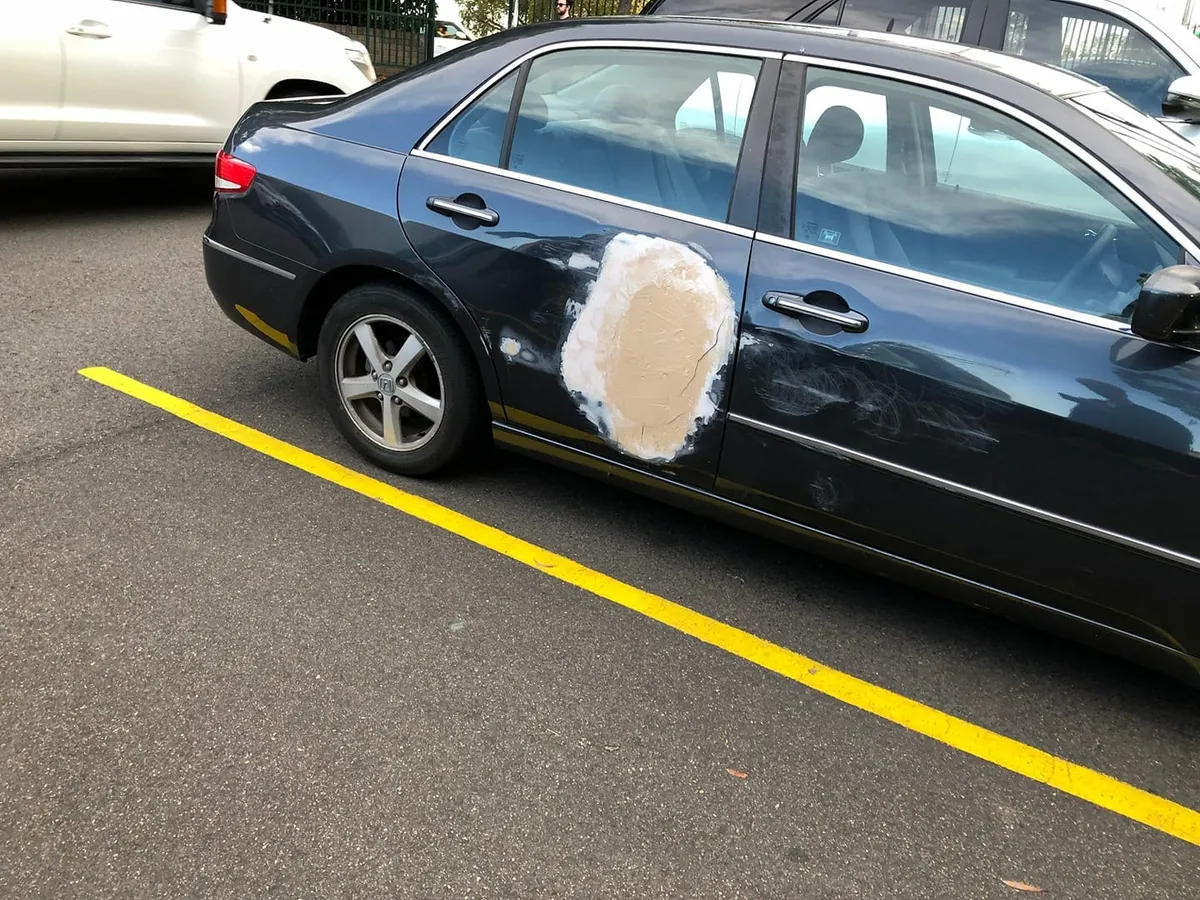
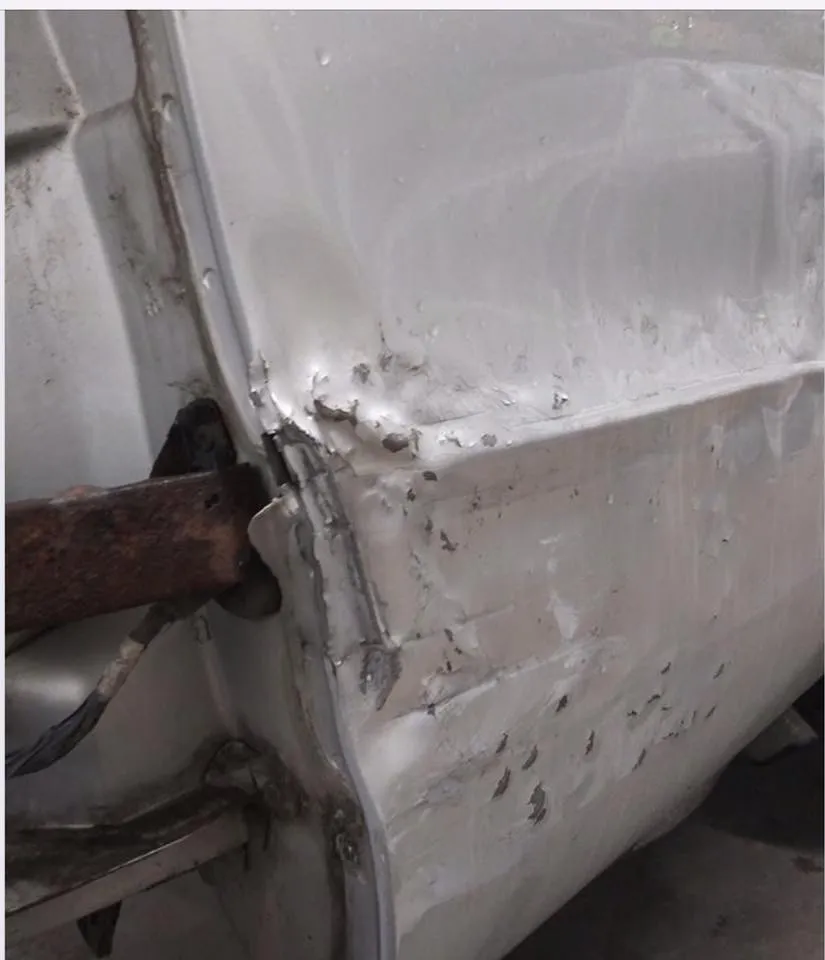
If your car looks like any of these, it is worth a second opinion before you pay another shop. Send Joe a few photos and he will tell you straight what it needs.
Can a Bad Paintless Dent Repair Be Fixed?
Sometimes. It depends entirely on how far the panel was pushed. A skilled hand can often bring a high spot back down, re-read a panel that was rushed, and recover a repair that an undertrained tech gave up on. I do this kind of correction work regularly. But there is a line.
- Often recoverable: a high spot or two from over-pushing, a dent that was started and abandoned, a panel that was simply worked in a hurry.
- Usually not recoverable with PDR: cracked or split clearcoat, metal that has been stretched past its yield point, drilled holes, or filler already under the paint. Once paint is broken or metal is stretched, paintless repair cannot put it back — that becomes paint or panel work.
The only way to know which side of that line your car is on is to look at it closely. Send me a few clear photos and I will tell you straight — whether it is a clean paintless recovery, a paint repair, or something I would not charge you to chase.
A cracked finish or stretched panel is permanent. That is why the cheapest repair is so often the most expensive one — you can pay a bargain price once and a respray later. Getting it right the first time is the only repair that stays invisible.
Why Cheap PDR Goes Wrong
The failures above are not bad luck. They come from the same root cause: experience. Paintless dent repair has one of the longest learning curves in the trade. Reading how a panel moves, knowing when to stop, choosing the right tool for steel versus aluminum — none of that comes from a weekend course or a starter tool kit off the internet.
A bargain operator survives on speed and volume. Crush the dent out, collect the cash, move to the next car. A high spot that catches the light in a parking lot is the next person’s problem. At Dent Evo, Joe Garcia does every repair himself, by hand. No franchise, no rotating crew, no one learning on your panel. Twenty-eight years on the tools is the difference between a dent that disappears and a dent that gets replaced by a worse one.
Why Bad PDR Shops Still Have Five-Star Reviews
Here is the part that catches good people off guard: a wall of five-star reviews does not mean the work is good. It means the shop is busy and friendly, and that most of its customers could not pick a clean repair out of a lineup if you set two panels side by side.
Most owners judge a repair from a few feet away, in the shade, on the day they pick the car up. The dent looks gone, the shop was nice, the price was low. Five stars. What they do not do is study the panel in direct sunlight from a low angle, where a high spot or a faint wave actually shows. Months later they might notice the reflection ripples right where the dent used to be, and they assume that is just how the panel is now. It is not. That is the repair, and it is what a good PDR job does not leave behind.
This is exactly why review counts are a weak way to choose a PDR tech. A real case makes it concrete.
An owner shared a door repair they were not happy with. They had picked the shop precisely because it carried all five-star reviews on Yelp. An experienced tech who looked at the photos said the tell was obvious: this is the kind of work you get from someone charging rock-bottom rates or someone who has not been doing it long, and the sharp lift mark left in the panel likely could not be fully removed anymore.
Five-star reviews, real money paid, a repair the owner was told was finished, and it still was not right. Read the thread →
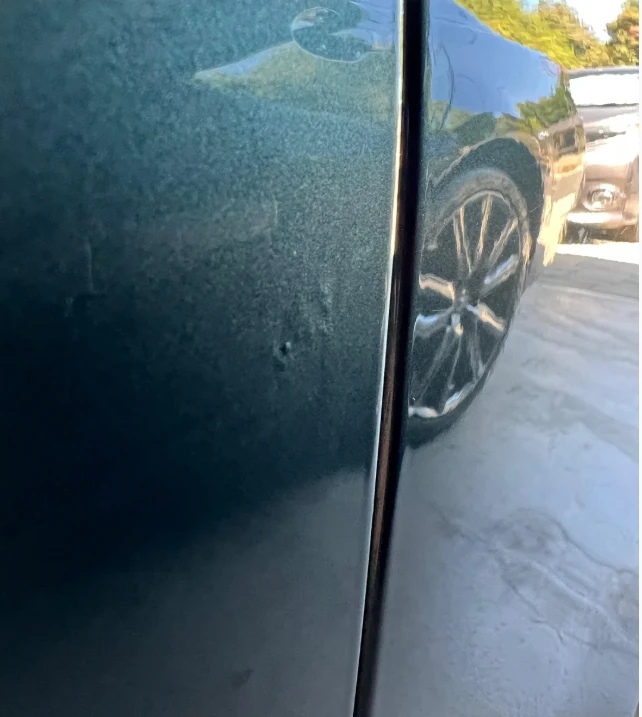
The customers most likely to leave a happy review are often the least equipped to judge the work, and the ones who spot the wave six months later rarely go back to change the rating. That same thread pointed out the part that really stings: fixing a botched repair is harder than fixing the original dent, so the redo usually costs more than the first job did.
The cheapest quote is rarely the cheapest repair.
A repair done right disappears in any light, from any angle, and it stays gone. That standard never shows up in a star count. It shows up in the panel, in the sun, six months down the road. That is the only review that counts.
How to Choose a PDR Tech Who Won’t Ruin Your Panel
You do not need to be an expert to avoid a bad repair. You just need to ask the right questions. Here are five that separate a real technician from a parking-lot gamble.
Five Questions Before You Hand Over Your Keys
- How long have you been doing PDR? Look for years, not months. The skill that prevents high spots and cracked clearcoat only comes with time on the tools.
- Do you have aluminum-specific tooling? Critical for any newer F-150, Tesla, Rivian, Lucid, or Lexus panel. Steel-era tools leave marks on aluminum that show in angled light.
- Will you turn down a dent that is not a PDR candidate? A tech who says yes to everything is the one who leaves you a worse panel. Honest shops tell you when paint is the right answer.
- What is your guarantee? Look for a complete satisfaction guarantee — the repair comes back to factory standard, or you do not pay.
- Will you quote from a photo? A skilled tech can read a clear photo and give you a real range in minutes. “Come in so we can see it” is often a setup for an in-person upsell.
Bad PDR FAQ
Can a bad paintless dent repair be fixed?
What does a bad PDR job look like?
Why is cheap paintless dent repair so risky?
Will a bad PDR repair show up later?
How do I know if my PDR was done right?
What happens if a dent is pushed too hard?
If a PDR shop has great reviews, does that mean the work is good?
Worried about a repair?
Get an honest answer first.
Whether you are choosing a shop or fixing a job that went wrong, send a few photos and Joe will tell you straight what your panel needs. No upsell, no pressure.
Get a Free Photo Estimate Or text photos to (909) 340-3440 — Joe picks up.
Ask Dent Evo
Dents, dings, hail and EV panels.
Answered by Dent Evo's AI assistant. Joe sees every chat.
Text us
Leave your name and mobile number and Joe will text you back, usually within minutes during shop hours.