
How Much Does Paintless Dent Repair Cost?
Honest ranges, the factors that move the number, and how to get a real quote for your specific vehicle.
The honest answer to “how much does paintless dent repair cost” is: somewhere between $195 and $4,000 or more, depending on what you’re dealing with. That’s not a dodge — it’s just the reality of a repair process where the variables matter enormously. A single small door ding and multi-panel hail damage are both PDR jobs, but they’re not the same job. Quoting them the same way wouldn’t be honest.
What I can do is walk you through exactly what drives the cost, give you real ranges for the most common repair types, and tell you how to get an accurate number for your specific situation. By the end of this, you’ll have a clear picture of what PDR should cost — and what it should cost you compared to the alternative.
The 4 Factors That Drive PDR Cost
Every quote I give comes down to these four variables. Understanding them tells you almost everything about why two dents that look similar can price out differently.
1. Dent size. This is the most intuitive factor. A dent the size of a dime is worked differently than a dent the size of a softball. Larger deformations require more time, more repositioning of tools, and more passes to bring the metal back to flat. The price scales with the size — not linearly, but meaningfully.
2. Dent depth and complexity. A shallow, smooth dent that retains a clean round profile is the ideal PDR candidate. The metal wants to go back. A deeper dent — or one that has a sharp crease through it — has stressed the metal more severely. Working a crease out without disturbing the paint is more demanding and takes more time. Deep dents on body lines, where two panel planes meet, are the most technically challenging repairs in PDR.
3. Panel location and access. PDR works from the back of the panel. On some panels, access is straightforward — remove an interior door card and you’re in. On others — rear quarter panels, pillars, certain rooflines — getting a tool behind the metal requires more disassembly or specialized equipment. Panels that are hard to access cost more to repair, not because the dent is worse, but because the work takes longer.
4. Number of dents. Multiple dents on the same panel typically don’t multiply the cost in a straight line. Once you’re set up and working a panel, additional dents on that same panel add time but not full setup cost. Where you see significant price increases is when damage spans multiple separate panels — each panel is its own access and setup job.
PDR Price Ranges by Repair Type
These are the ranges I work from, based on the repairs we see regularly in Upland and the surrounding Inland Empire. They reflect real-world Dent Evo pricing — not a national average from a website that hasn’t quoted an actual dent.
| Repair Type | Description | Typical Range |
|---|---|---|
| Single door ding (small) | Parking lot impact, quarter-sized or smaller, shallow depth, paint intact | $195 – $295 |
| Multiple door dings | 2–5 dings on the same panel or spread across 2 doors | $195 – $350 |
| Medium dent (golf ball size) | Larger single impact, smooth profile, no crease, paint intact | $250 – $450 |
| Large dent (multiple panels) | Impact spanning more than one panel, or one large panel fully affected | $500 – $900 |
| Light hail damage | Single-panel or limited multi-panel hail, nickel to quarter-sized impacts | $500 – $1,200 |
| Extensive hail damage | Multi-panel, high impact count, larger hail size | $1,200 – $4,000+ |
| EV or luxury panel | Aluminum panels, limited access due to construction, or specialty materials | Premium pricing — varies |
A note on the EV and luxury panel line: vehicles like Teslas, Rivians, Lucids, and high-end European models often use aluminum panels, complex panel assemblies, or construction that limits access in ways that steel panels on a standard sedan don’t. The work requires different tools, more time, and higher technical precision. It’s not dramatically more expensive in every case, but it’s never the same as working a conventional steel door. If you drive an EV or a luxury vehicle, see our dedicated EV dent repair page for more specific information.
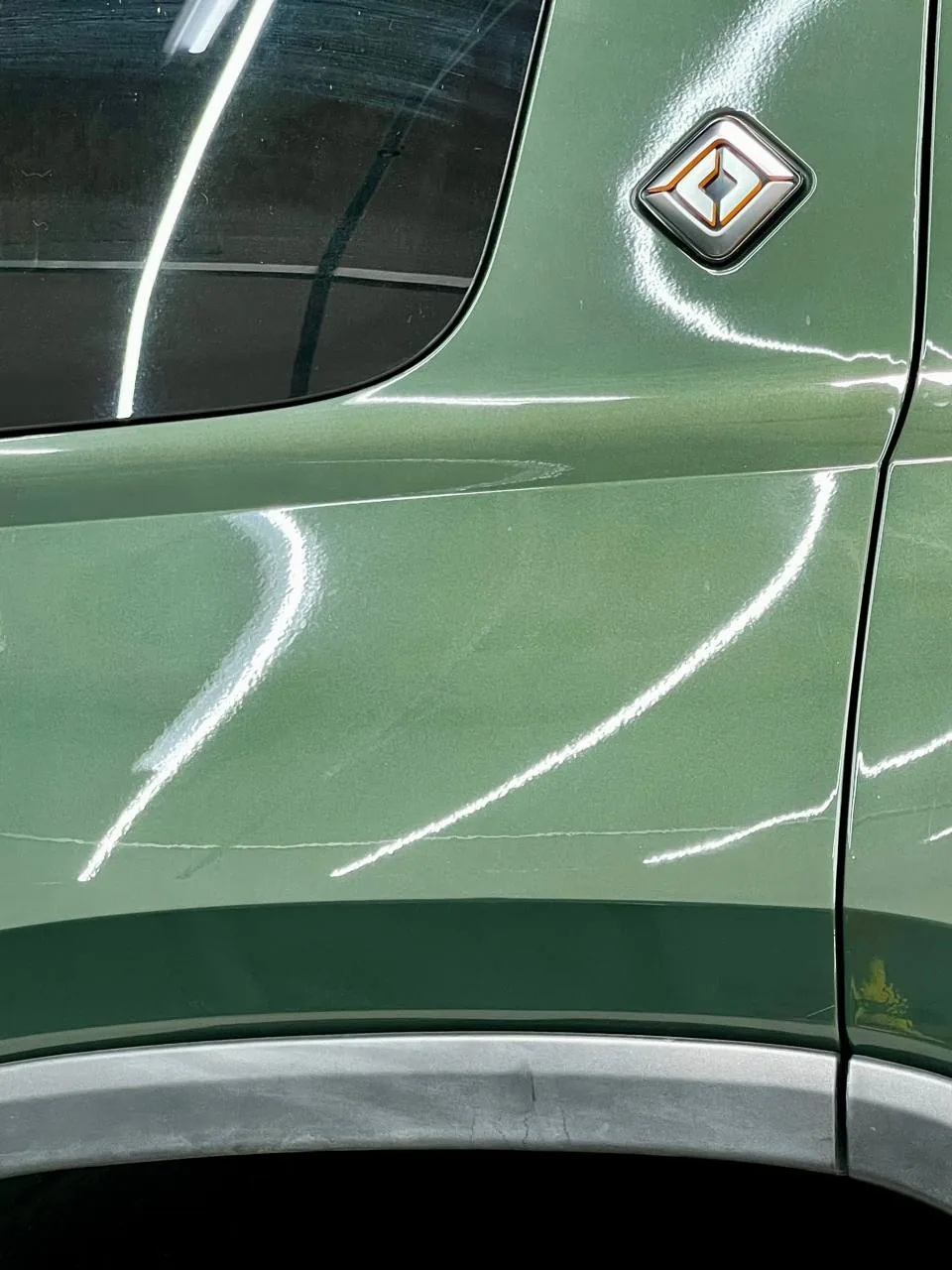
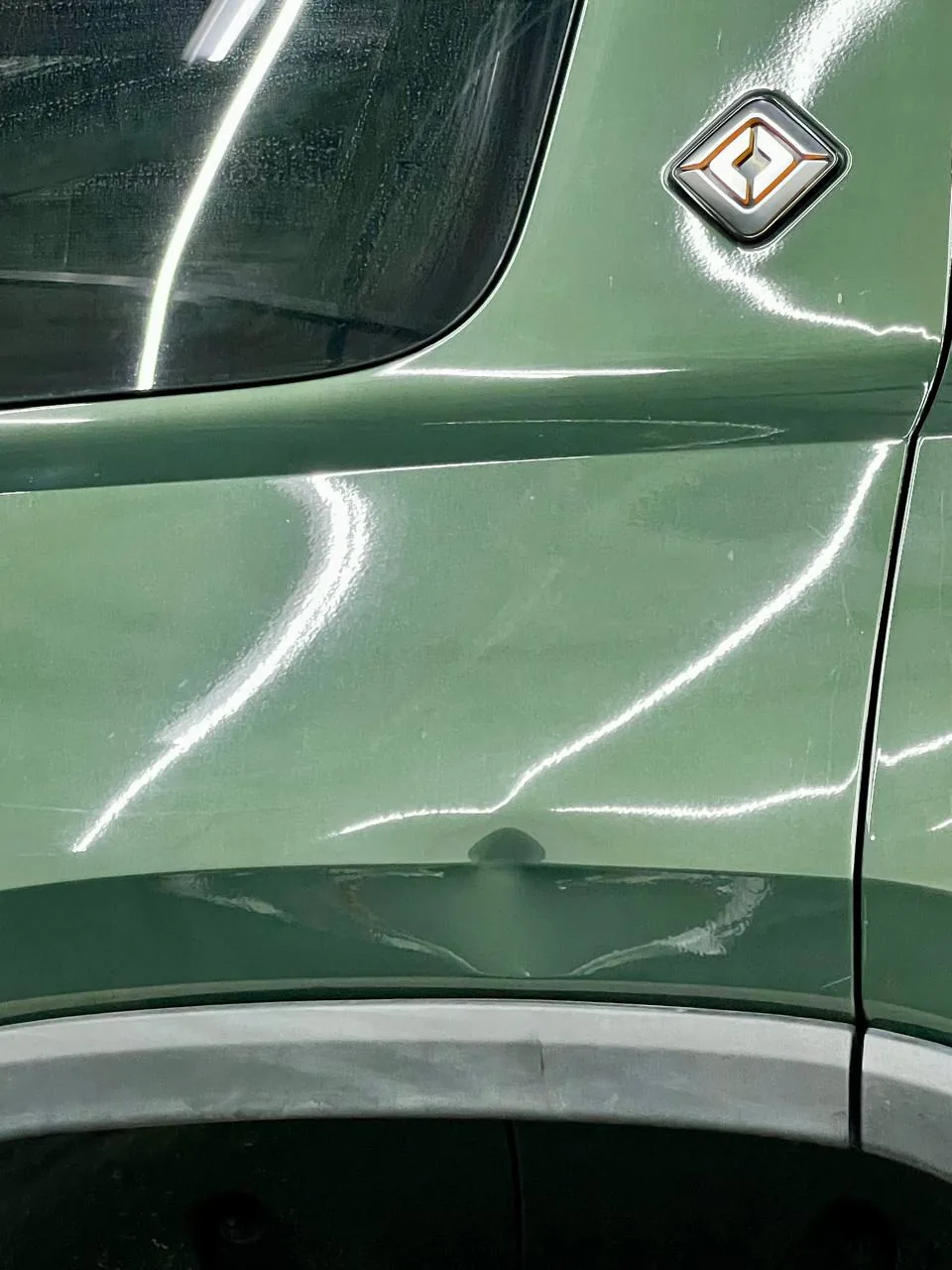
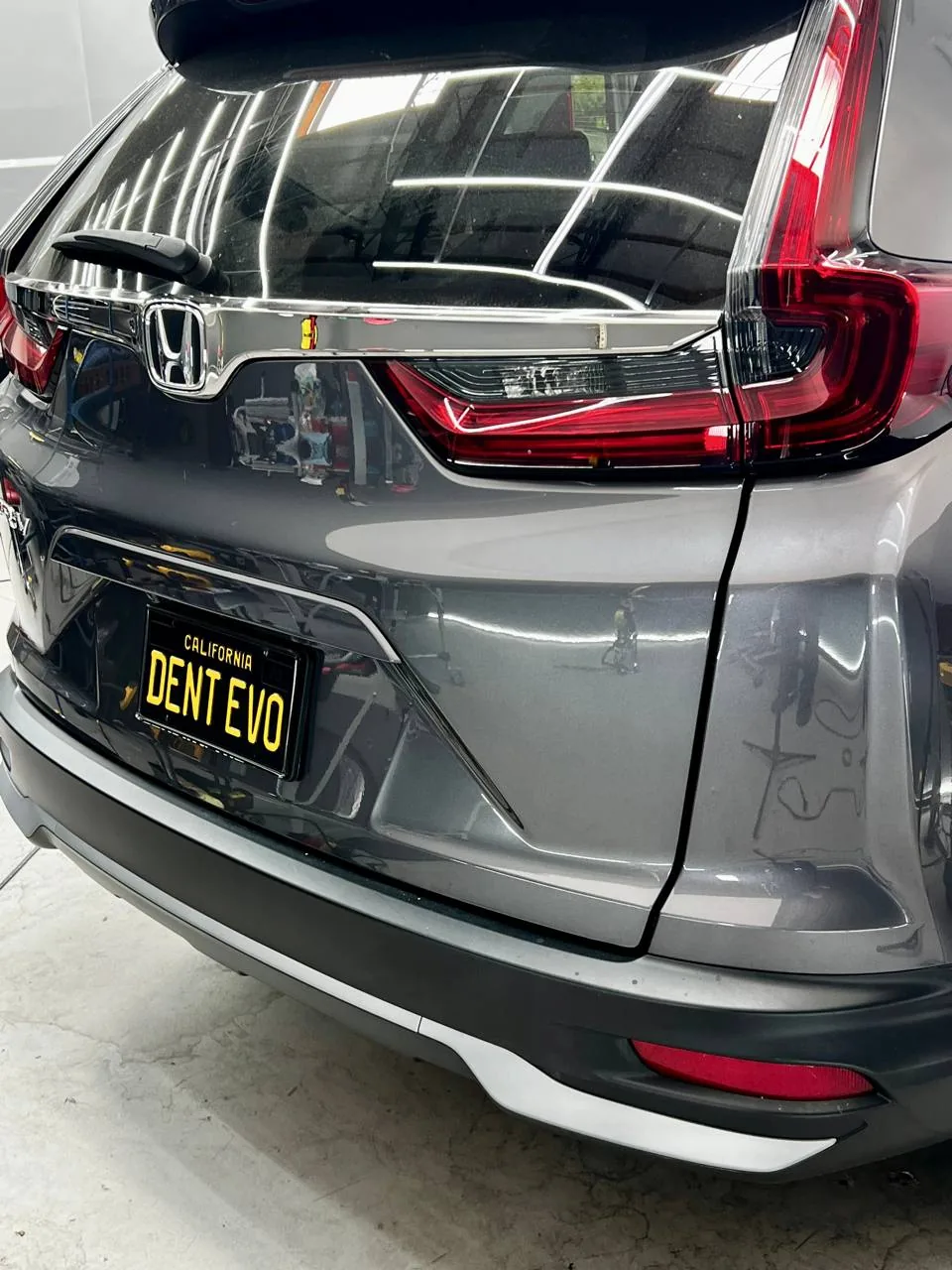
Drag to Reveal the Repair
 After
After
 Before
 After
After
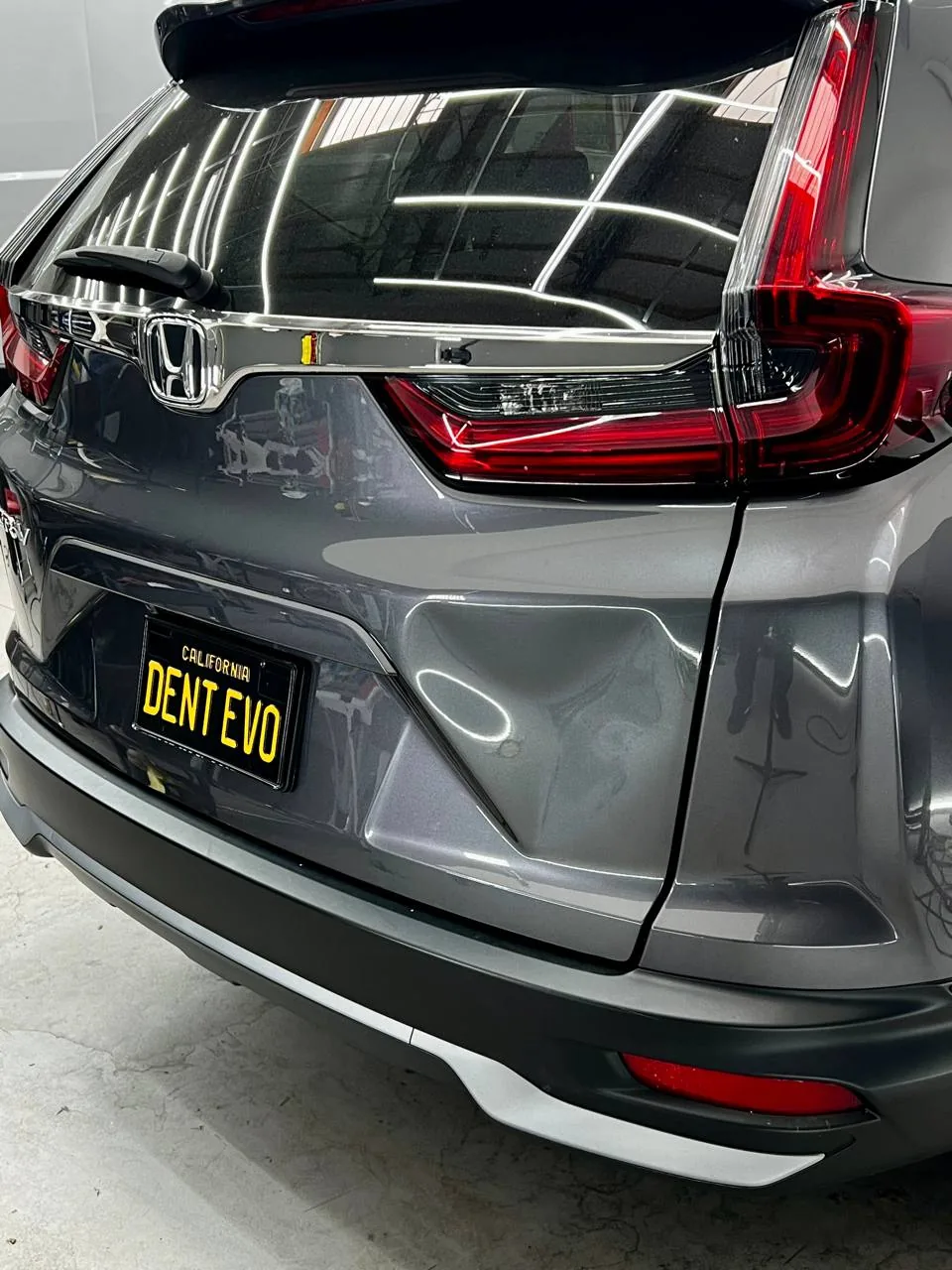 Before
Factory paint preserved on every repair — no filler, no respray, no Carfax entry
Why PDR Pricing Is Quote-Based, Not Menu-Based
You’ve probably noticed that PDR shops don’t publish a simple price list the way a car wash or a tire rotation service does. There’s a reason for that, and it’s not evasion — it’s how the work actually functions.
PDR pricing is time-based and access-based. A door ding on a 2020 Honda Accord and a door ding on a 2023 Tesla Model 3 may look similar from the outside. The Accord has a conventional steel door with a standard interior panel. The Model 3 has a frameless window, a different door construction, and access geometry that changes the repair approach entirely. Quoting them at the same price would mean either overcharging one customer or undercharging another.
The same logic applies to dent depth. A dent that photographs as medium-sized can range from a straightforward 30-minute repair to a demanding two-hour job depending on whether there’s a crease through it, where it falls relative to a body line, and how the panel is constructed behind the surface. Photos reveal a lot, but there are subtleties that only become clear when you’re working the metal under proper lighting.
This is why a good PDR shop will always give you a quote before starting work — based on your specific vehicle, your specific damage, your specific access situation. If someone gives you a firm price before seeing your car, that number is either padded heavily to cover the unknowns, or it’s going to change when they actually look at it. Neither is useful.
Premium vs. Practical: Two Tiers at Dent Evo
At Dent Evo, we offer two repair tiers because we’ve found that different customers need different things — and being honest about that saves everyone time.
The Premium repair brings every impacted panel back to flawless. The work is inspected under proper lighting from every angle, and we keep working until there’s nothing left to find. If you drive a vehicle you care about, plan to keep it for years, want to maintain maximum resale value, or simply have the standard that the finish should be exactly as it came from the factory — this is the tier you want. The result is indistinguishable from undamaged metal.
The Practical repair delivers a clean, professional result. The damage is corrected to a standard that looks right under normal inspection. If your vehicle is older, you’re planning to trade it in within a year, or you need the damage addressed without the full refinement process, Practical gives you a legitimate, high-quality outcome at a lower total cost.
Both tiers use the same PDR process. Both preserve your factory paint. Both protect your Carfax record. The difference is the level of final refinement — how many additional passes we make under specialized lighting to find and address the last 5% of the imperfection. You can see the full breakdown on our pricing page.
PDR vs. Body Shop: The Real Cost Comparison
When people ask about dent repair cost, they’re usually comparing PDR to a traditional body shop, even if they don’t say so explicitly. Here’s the honest comparison.
For the same damage — a medium dent on a door panel, for example — a body shop repair typically runs 3 to 5 times what PDR costs. They’re using filler, primer, paint, and clear coat. Each material costs money. The process takes significantly longer. And the labor rate at a body shop reflects their overhead, equipment, and certification requirements for paint work. None of that is unreasonable — it’s just not relevant if PDR is a viable option for your damage.
The dollar difference is the obvious part. The less obvious part is what else you’re paying when you go the body shop route. The factory paint on that panel is gone. You’ll have aftermarket paint that, however well color-matched, ages differently than the original finish — and paint thickness gauge readings that differ from factory spec. If the repair went through insurance, there’s a Carfax entry now. At trade-in or private sale, both of those factors become negotiating leverage for the buyer, not for you.
PDR doesn’t create either of those problems. The metal is restored, the factory paint is untouched, and there’s no repair record unless you filed an insurance claim to cover it. The vehicle comes out of the process in the same condition it was in before the damage occurred — not a repaired condition, but the original condition. That distinction matters more than most people realize until they’re trying to sell.
When Insurance Makes Sense — and When Out-of-Pocket Does
This is one of the most practical questions in dent repair, and it deserves a straight answer rather than a generic “consult your insurer.”
Filing a comprehensive claim makes sense when the damage is extensive — multi-panel hail damage, large collision impacts, situations where the repair cost is going to be several hundred dollars above your deductible and you’d feel the out-of-pocket cost. At that scale, the insurance is there for exactly this purpose, and using it is reasonable.
Filing a claim becomes questionable when the repair cost is close to your deductible or only modestly above it. Say your deductible is $500 and the PDR quote is $350. Filing makes no sense — you’d pay $500 to save $350. If the quote is $800, you’d net $300 from the claim. But you’ve now created a Carfax entry for a vehicle damage event, and you’ve given your insurance company a claims record that can affect your rates at renewal. Whether that trade-off is worth it depends on your vehicle’s value, how long you plan to keep it, and how sensitive your insurance rate is to claims history.
As a rough guide: if the repair cost is under $500, pay out of pocket for PDR and keep your history clean. Above that, run the actual numbers — deductible, potential rate impact, and what a clean Carfax is worth to you when you sell.
A Note If You’re in San Diego
Dent Evo is based in Upland, and we serve the Inland Empire — Upland, Claremont, Rancho Cucamonga, Ontario, La Verne, and the surrounding foothill communities. If you’re in San Diego and looking for the same standard of work, Dent Time, a PDR specialist in San Diego that Dent Evo occasionally collaborates with, brings the same approach to the San Diego area. Worth a call if you’re down that way.
How to Get an Accurate Estimate from Dent Evo
Getting a real number from us is straightforward. Send photos of the damage — exterior shots in natural daylight, close enough that the dent profile is visible, plus a wider shot showing which panel and where on the vehicle. If you can get a low-angle shot with light raking across the surface, that shows depth better than anything shot straight-on.
I review estimate photos personally. You’ll have a response with a real quote within minutes of sending them — not a range so wide it’s useless, not a “we’ll have to see it in person” response, but an actual number based on what I can see in the photos. If something genuinely requires a hands-on look before I can commit to a price, I’ll tell you that directly and explain why.
For door ding repairs, most quotes are straightforward from photos. Complex repairs — large dents with potential creases, EV panels, damage near body lines — may warrant a quick in-person look before final pricing, but even those usually start with a photo review.
You can get started at /get-estimate, or if you want to understand the process before sending anything, /start-here walks you through how it works from first contact to completed repair.
Frequently Asked Questions About PDR Cost
What’s the average cost of paintless dent repair?
The average PDR repair in our shop runs between $195 and $350 for single-panel damage without complicating factors. That covers the most common scenario — a door ding or small-to-medium dent with intact paint, good access, and no crease. Hail damage, multi-panel repairs, and EV vehicles push that average upward. The only number that matters for your situation is the quote based on your specific vehicle and damage.
Why do PDR prices vary so much from shop to shop?
A few reasons. Technician skill level varies — and PDR is a precision craft where skill differences are real and show in the result. Shop overhead and location affect labor rates. Some shops price competitively to generate volume; others price for the quality of the work. A quote that’s 40% lower than others isn’t necessarily a deal — it’s worth asking what’s included and looking at the work they’ve actually done. Reviews and photos of completed repairs tell you more than a price alone.
Does my car need to be at the shop, or can PDR be done mobile?
Mobile PDR is a real service, and it works well for simple repairs — a single door ding on an accessible panel on a standard vehicle. More complex repairs benefit from a controlled shop environment: stable lighting for glare reading, proper access to the vehicle from all sides, and the right tool set at hand. At Dent Evo, we handle repairs at our Upland location for anything beyond the most straightforward single-dent jobs. For our full range of capabilities, see how we work.
How much does it cost to fix a dent without repainting?
That’s exactly what PDR is — dent repair without repainting. For a standard door ding with intact paint, you’re looking at $195 to $295. Larger dents scale upward based on size, depth, and access. The paint-free approach is possible whenever the paint is intact and the metal can be accessed from behind the panel, which covers the vast majority of common dent types. When paint is cracked or chipped, PDR can still correct the dent, but the paint damage is addressed separately.
Is PDR worth it on an older car?
Yes, in most cases — though the decision looks slightly different than it does on a newer vehicle. The core benefit of PDR is preserving factory paint and keeping Carfax clean. On an older car you plan to sell privately, a clean repair that keeps the original paint intact still commands a better outcome than a body shop repair that puts aftermarket paint on a panel. If the vehicle has older paint that’s already weathered or oxidized, the calculus shifts somewhat — a paint-matching repair might actually hide the age better. The honest answer is it depends on the vehicle, and a good technician will tell you which approach makes more sense for your specific situation.
Can you fix a large dent with PDR, or does it require a body shop?
Large dents are not automatically disqualified from PDR. The question is whether the paint is intact and whether the metal has been creased rather than simply deformed. A large, smooth dent — even one spanning a significant portion of a panel — can often be corrected entirely via PDR if the paint has held and the deformation doesn’t involve a sharp fold in the metal. Body shop work is appropriate when paint is broken, when the damage is structural, or when a crease has permanently altered the metal’s memory. Those cases exist, but they’re less common than people assume. When in doubt, get a PDR assessment first.
Get a Real Quote in Minutes
Send photos of your damage. Joe reviews every estimate personally and responds within minutes — not hours, not days. No obligation, no runaround.
Get My Estimate